| |
PROFILE
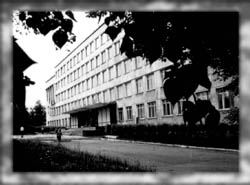
Omsk State University is one of the youngest universities in Siberia.
The University aims to offer quality Higher Education services in order to
meet the needs of individuals, organisations, businesses and community at
regional and national levels. These services consist primarily of teaching
and the facilitation of learning, consultancy and research.
|
HISTORY
The University was founded in 1974. At first there were only two
departments (humanities and science) at the University and the
academic staff consisted of 40 teachers. The students of history,
philology and law studied in the department of humanities while science
department trained future specialists in physics, chemistry and
mathematics. At present the University comprises thirteen
Departments - Economics, Law, Philology, History, Mathematics,
Computer Science, Physics, Chemistry, International Business, Foreign Languages,
Culture Study, Psychology and Theology - as well as the Access
Department.
|
COURSES
University programmes are delivered in full-time, part-time and extramural modes through lectures, seminars and practice classes including individual studies in libraries.
The University full-time programmes last for five years and usually involve three modules of disciplines:
- general humanitarian disciplines;
- subject-general disciplines;
- specialist or subject-specific disciplines.
The University provides an extensive range of diplomas and professional qualifications from its Departments and from a number of new specialisations and divisions set up within them of late, such as Computer Security, Commerce, Psychology, Management, Finance and Credits, Accounting, Theology, Area Study, Culture Study, etc.
It also offers the possibility of multisubject study at postgraduate level (25 postgraduate and specialist degree courses) and awards degrees including Kandidat and Doctor's degrees in Mathematics, Computer Science, Physics, Chemistry, Law, Economics, Labour Economics and Sociology, Psychology, Social Work, History, Ethnography, Archaeology, Linguistics, Russian Literature as well as Bachelor's degree in Business, Management, Marketing.
The academic year lasts from September to May with a two-week break in winter and two-month break in summer. Typically students are to take credits in five to ten subjects and exams in four to five disciplines twice a year - in January and in June. During semesters they are to submit essays and courseworks. So usually students are rather busy to cope with their courses if they want to pass their exams and get credits. The workload of a student, including his individual out-of-class work, is planned to take up approximately 50-55 hours a week. During the period of learning, every student must pass 35-40 term examinations.. At the end of the course of study students are to write their final thesis and get diploma.
The undergraduates are given a taste of research work as early as possible. Those who want a mental challenge can join the science clubs associated with various departments in the second or third year and work under the supervision of our scientists and teachers. There they write papers on subjects which are outside their curricula, handle individual problems, experiment, translate scientific papers from foreign languages, learn computer technology. Annual competitions and conferences help students to check and consolidate the knowledge they gain.
According to their special fields of interest, objectives of educational program and professional career students can choose from a number of electives.
Typically students study one foreign language except those at Foreign Languages Department and Area Study Division where they are supposed to be instructed at least in two foreign languages. However, other students are also encouraged to learn a second foreign language or master their first foreign language skills at foreign language electives. As there is great demand for these, all those who apply are tested to determine their foreign language proficiency. On the basis of the test scores, they are either accepted or refused. So if you did not make satisfactory test scores, you won't be placed in the desired course.
Great importance is also attached to students active citizenship position and responsibility, cross-cultural and ecology awareness, to their acquiring organizsational skills and ability to work as a team.
|
FACILITIES
Omsk University is a campus University, its five buildings being within easy reach of each other. It has two nine-story hostels: two or three students share a room. The hostels have laundry facilities, payphones, TV lounges, and game rooms. Self-catering rooms provide facilities for communal cooking and dining.
The University offers a number of services and facilities to students, faculty and staff. Among these are photocopy offices, a book store, libraries, learning rooms, computer laboratories, a Health centre, a playground, two gyms, cafeterias and canteens, a large conference hall. A variety of small items and stationery as well as carryaway food-stuff are available on the University premises.
The University library possesses a good stock of printed matter both in belles-letters and in particular subject fields. Besides, the University subscribes to a number of subject-specific periodicals as well as to the daily and weekly newspapers including some well-known foreign publications.
The learning rooms set aside as study areas on the library's premises and computer labs in areas specially designated by each department are widely used by both students and faculty to read for classes and exams, to write articles, essays and courseworks, to rehearse presentations.
Networked computers also provide the Internet and electronic mail (e-mail) complementary (free of charge) access. To use these one needs just to register with the university as a network user. Recently our university library has received a free access to the Internet information resources.
The University also posseses its own publishing facilities, which enables it to print its own newspaper. The newspaper gives insights into different aspects of the University life from interesting social and sport events to the most urgent current educational issues and to the future prospects of higher education as a whole. Students and faculty can write their articles for it.
The University Publishing Department together with the Scientific-Educational Fund (NOF) are responsible for issuing various kinds of research as well as teaching and methodical literature. NOF is also in charge of organising preparatory courses and administering tests for high school students and applicants.
|
INTERNATIONAL PARTNERSHIPS
According to the agreement with Tashkent State University (Uzbekistan) and Pavlodar Academic University (Kazakhstan) and Chukot administration Omsk University is to assist it in developing linked academic programmes.
The University maintains professional contacts with Wolverhampton University (Great Britain), the University of Man (the U.S.A.) and Southern Cross University (Australia). For example, one more year of distant learning under Agreement between the latter (the Department of Business and Computing) and Omsk University allows for a wide range of specialisations leading to either internationally accepted Certificate, or Diploma, or MBA from Southern Cross University as well as Omsk University Diploma of retraining or refresher course.
The University's Foreign Languages Department is a member of some International Projects (TEMPUS COMPACT, Paris-Sorbonna, and some others). In 2000 a Language Centre equipped with modern audio-video devices and mainly designed for individual work opened its doors.
In recent years a number of teachers and students have become alumni of different International Exchange Programmes such as the Fulbright, VIP and ACTR / ACCELS Regional Scholars Programs, IREX Freedom Support Act Program. Some students have won grants to continue their education at American universities and colleges.
|
BUSINESS PARTNERSHIPS
The University is a major regional provider of training, consultancy, and contract research for a wide range of clients from all aspects of administration, education, culture, industry and commerce.
|
SOCIAL LIFE
Students spend their leisure time to their taste either taking part in different University or city community interest clubs such as sport, drama, music, dancing, and others or just going to theatres, museums, concerts and discoteques. For those who would like to try their hand at acting the student theatre "Poisk" is the right place to start with.
|
CENTER FOR BUSINESS EDUCATION
The Center is a separate structural unit within the University set up to provide a range of educational and consultancy services for all levels of management, entrepreneurs, employees, students and currently unemployed. Its main objective is to develop the relevant knowledge, skills and competence to meet the present and future needs of industry, commerce and society through refresher and retraining courses in some specialist areas of Law, Finance and Credit, Management and Psychology.
These are delivered in full-time, part-time and combinatory modes, as well as short courses (including in-company trainings and seminars) and tailor-made programmes on the basis of in-depth research of local labour market.
The Center employs tutorial system. Students can choose the subjects and need not give up their work. Learning is through lectures, seminars, trainings and tutorials conducted both by university academic staff, visiting scholars and highly qualified practicians. The forms of control include tests, interviews and certification. The final state certification in accordance with the requirements of educational standards is compulsory for all Center graduates.
The Center also offers professional evaluation and placement assistance to higher school and the Center graduates.
|
|
|